© 2025
Back to writing

Blockchains in Africa

When 96% of citizens can't access the solution

3 min readMay 22, 2022

In 2022, the Central African Republic adopted Bitcoin as legal tender. 4% of its population has internet access.

Who benefits from Bitcoin adoption in a country where 96% of citizens can't use it?

This question captures the gap between crypto's promise in Africa and its practical reality. The continent faces problems blockchains could genuinely solve—currency instability, remittance extraction, limited financial access. But "could solve" and "will solve" are separated by infrastructure, education, and political reality.

Key Takeaways

  • Africa's 1.5 billion people face problems blockchains could solve: unstable currencies, 7%+ remittance fees, limited banking access.
  • Nigeria and Seychelles lead blockchain venture capital, but adoption requires infrastructure most countries lack.
  • Early experiments in El Salvador and CAR reveal that announcing Bitcoin as legal tender is the easy part.

The Landscape

Over 1.5 billion people live across Africa's 54 countries, about 40% under age 15. Countries like Nigeria, Seychelles, Ethiopia, Ghana, Kenya, Mauritius, Rwanda, South Africa, and Tanzania are experimenting with blockchain—through policy, partnerships, or grassroots adoption.

Graph showing the increase in remittances sent via crypto to Africa over the past few years

Nigeria and Seychelles have led blockchain venture capital on the continent, capturing over half of all related VC funding. The contrast within Nigeria alone tells the story: millionaire population up 44% in a decade, yet nearly 60% live on less than $1 per day. Crypto isn't solving inequality—but it might solve specific problems for specific people.

What Blockchains Could Solve

Currencies

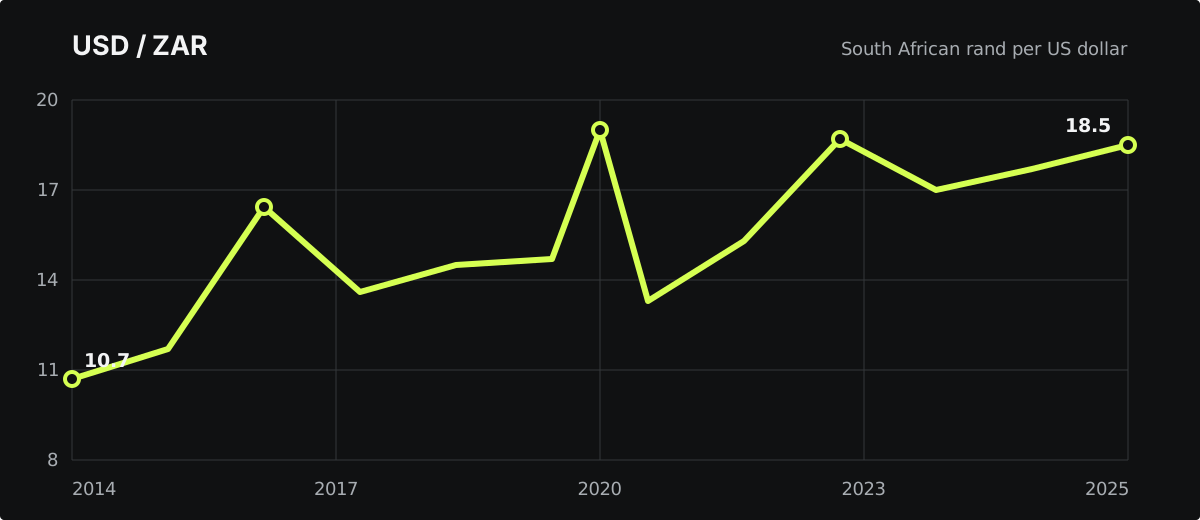
Many national currencies across Africa suffer from chronic inflation. In 2007, Zimbabwe's hyperinflation reached the point where prices doubled every 24 hours. The South African Rand has also lost significant value in recent years. For individuals and businesses, this makes it difficult to store value or transact reliably.

Stablecoins like USDC and USDT, accessible via non-custodial wallets, allow users to hold assets in more stable units without relying on fragile local financial infrastructure.


Remittances

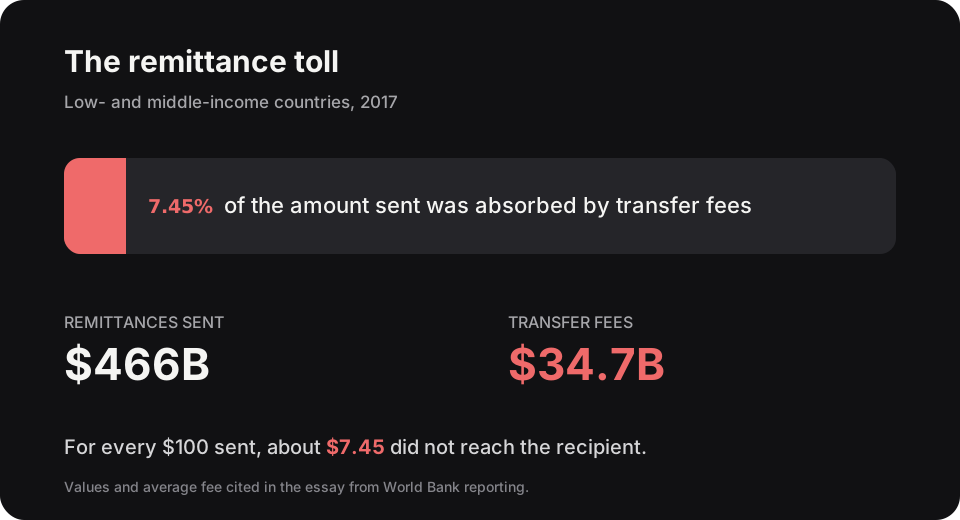
Remittances—payments sent by workers abroad back to families at home—are expensive. The math is brutal:

  • Average transfer fee: 7.45%
  • 2017 remittances to low/middle-income countries: $466 billion
  • Fees extracted: $34.7 billion
  • Days of labor lost to fees (for a typical worker): 27 per year

That $34.7 billion equals the entire US non-military foreign aid budget. It's not redistributing wealth from rich to poor—it's extracting from the poor to support inefficient intermediaries.

On Solana, you can send one million transactions for around $10. The technology works. But local banks often don't accept crypto, regulators are skeptical, and off-ramps are limited. The last mile is the hard mile.

Graph showing the increase in remittances sent via crypto to Africa over the past few years


Debt & Digital Sovereignty

China is now Africa's largest creditor and has banned public crypto use at home to pave the way for its central bank digital currency (CBDC).

Graph showing China's debt to African countries

Over the past two decades, China has invested heavily in African infrastructure—roads, railways, ports. But these projects come with long-term debt obligations that limit recipient countries' independence.

Blockchains offer a potential alternative path—allowing African businesses and individuals to operate globally, raise capital, and store value without relying on local banks, fragile currencies, or permission from centralized authorities.


When Adoption Goes Wrong

Progress isn't without missteps—and the missteps are instructive.

El Salvador (2021): Made headlines adopting Bitcoin as legal tender. Despite early fanfare, the Lightning Network struggled with adoption, vendor resistance remained high, and the IMF downgraded the country's credit rating.

El Salvador Scene

Central African Republic (2022): Followed suit with Bitcoin adoption. Context matters: 4% internet access, ranking 188 out of 189 on the global welfare index, deep ties to Russia, long-standing instability.

Vibrant river in CAR

Even the optimistic take—"Now citizens won't need to carry CFA francs to convert into dollars!"—misses the prerequisites: reliable internet, blockchain knowledge, and enough savings to absorb network fees that can exceed a month's income.

The pattern: announcing Bitcoin adoption is easy. Building the infrastructure, education, and economic conditions for it to matter is hard.

The Honest Assessment

In places like the Central African Republic, paying $5-15 in Bitcoin fees isn't practical. That's a month's income. It's not a solution—it's regression.

Low-fee chains like Solana make more sense for emerging markets. But even then, users need:

  • Internet access
  • Crypto literacy
  • Enough savings to absorb any fees at all
  • Off-ramps that actually work

For most of the continent, that's not the current reality.

The problems are real. The solutions exist. The gap between them is infrastructure, education, and time—not technology. Blockchains can help Africa, but only where the prerequisites are met. Everywhere else, it's still waiting.

Comments

Loading comments...
All articles

Articles

crypto
D'audio: Powered by ShelbyCrypto-ReposThe Fundamental FlawMnemonic PhrasesUnbanked to Bankless
tech
DocpullClaude StarterKernel AccessBlue Screen of DeathSearch Engine Turbulence
finance
Digital GoldA Bird's Eye ViewEasy Money and Veblen GoodsDerivatives vs Spot
music
MusicIDE

Blockchains in Africa

crypto

When 96% of citizens can't access the solution

3 min readMay 22, 2022
crypto

In 2022, the Central African Republic adopted Bitcoin as legal tender. 4% of its population has internet access.

Who benefits from Bitcoin adoption in a country where 96% of citizens can't use it?

This question captures the gap between crypto's promise in Africa and its practical reality. The continent faces problems blockchains could genuinely solve—currency instability, remittance extraction, limited financial access. But "could solve" and "will solve" are separated by infrastructure, education, and political reality.

Key Takeaways

  • Africa's 1.5 billion people face problems blockchains could solve: unstable currencies, 7%+ remittance fees, limited banking access.
  • Nigeria and Seychelles lead blockchain venture capital, but adoption requires infrastructure most countries lack.
  • Early experiments in El Salvador and CAR reveal that announcing Bitcoin as legal tender is the easy part.

The Landscape

Over 1.5 billion people live across Africa's 54 countries, about 40% under age 15. Countries like Nigeria, Seychelles, Ethiopia, Ghana, Kenya, Mauritius, Rwanda, South Africa, and Tanzania are experimenting with blockchain—through policy, partnerships, or grassroots adoption.

Graph showing the increase in remittances sent via crypto to Africa over the past few years

Nigeria and Seychelles have led blockchain venture capital on the continent, capturing over half of all related VC funding. The contrast within Nigeria alone tells the story: millionaire population up 44% in a decade, yet nearly 60% live on less than $1 per day. Crypto isn't solving inequality—but it might solve specific problems for specific people.

What Blockchains Could Solve

Currencies

Many national currencies across Africa suffer from chronic inflation. In 2007, Zimbabwe's hyperinflation reached the point where prices doubled every 24 hours. The South African Rand has also lost significant value in recent years. For individuals and businesses, this makes it difficult to store value or transact reliably.

Stablecoins like USDC and USDT, accessible via non-custodial wallets, allow users to hold assets in more stable units without relying on fragile local financial infrastructure.


Remittances

Remittances—payments sent by workers abroad back to families at home—are expensive. The math is brutal:

  • Average transfer fee: 7.45%
  • 2017 remittances to low/middle-income countries: $466 billion
  • Fees extracted: $34.7 billion
  • Days of labor lost to fees (for a typical worker): 27 per year

That $34.7 billion equals the entire US non-military foreign aid budget. It's not redistributing wealth from rich to poor—it's extracting from the poor to support inefficient intermediaries.

On Solana, you can send one million transactions for around $10. The technology works. But local banks often don't accept crypto, regulators are skeptical, and off-ramps are limited. The last mile is the hard mile.

Graph showing the increase in remittances sent via crypto to Africa over the past few years


Debt & Digital Sovereignty

China is now Africa's largest creditor and has banned public crypto use at home to pave the way for its central bank digital currency (CBDC).

Graph showing China's debt to African countries

Over the past two decades, China has invested heavily in African infrastructure—roads, railways, ports. But these projects come with long-term debt obligations that limit recipient countries' independence.

Blockchains offer a potential alternative path—allowing African businesses and individuals to operate globally, raise capital, and store value without relying on local banks, fragile currencies, or permission from centralized authorities.


When Adoption Goes Wrong

Progress isn't without missteps—and the missteps are instructive.

El Salvador (2021): Made headlines adopting Bitcoin as legal tender. Despite early fanfare, the Lightning Network struggled with adoption, vendor resistance remained high, and the IMF downgraded the country's credit rating.

El Salvador Scene

Central African Republic (2022): Followed suit with Bitcoin adoption. Context matters: 4% internet access, ranking 188 out of 189 on the global welfare index, deep ties to Russia, long-standing instability.

Vibrant river in CAR

Even the optimistic take—"Now citizens won't need to carry CFA francs to convert into dollars!"—misses the prerequisites: reliable internet, blockchain knowledge, and enough savings to absorb network fees that can exceed a month's income.

The pattern: announcing Bitcoin adoption is easy. Building the infrastructure, education, and economic conditions for it to matter is hard.

The Honest Assessment

In places like the Central African Republic, paying $5-15 in Bitcoin fees isn't practical. That's a month's income. It's not a solution—it's regression.

Low-fee chains like Solana make more sense for emerging markets. But even then, users need:

  • Internet access
  • Crypto literacy
  • Enough savings to absorb any fees at all
  • Off-ramps that actually work

For most of the continent, that's not the current reality.

The problems are real. The solutions exist. The gap between them is infrastructure, education, and time—not technology. Blockchains can help Africa, but only where the prerequisites are met. Everywhere else, it's still waiting.

Comments

Loading comments...

Category

crypto

Published

May 22, 2022

Reading Time

3 min read

Tags

crypto

All Tags (17)

crypto(18)
web(3)
computing(2)
decentralized-streaming
shelby
aptos
web3
python
documentation
ai-training
web-scraping
bitcoin
gold
inflation
theory
ai
trading

Contents

Key Takeaways
The Landscape
What Blockchains Could Solve
Currencies
Remittances
Debt & Digital Sovereignty
When Adoption Goes Wrong
The Honest Assessment